
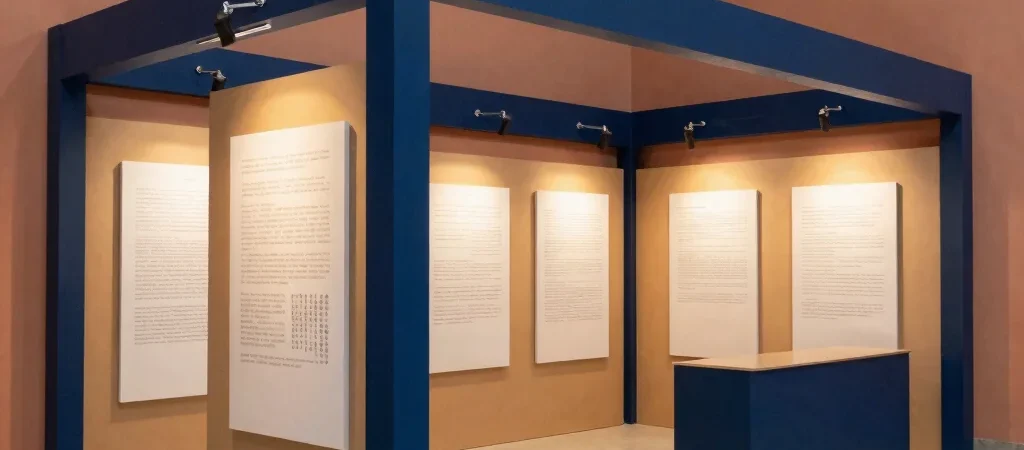
At an exhibition, a visitor may first see a panel from several steps away, then read it up close—or pass it altogether. That movement makes panel design and stall layout part of the same problem. A clear exhibition gives people more than one way to enter the story.
Plan the View From Afar
Begin with what can be recognized before someone stops: a strong heading, a focused image, or a clear visual signal. The supporting text can carry detail for visitors who choose to come closer. When every panel element competes for attention, the main idea is difficult to pick out at a glance.
Give the Stall a Route
A stall layout should account for where visitors approach, where they can pause, and how they move between display elements. Placing a key panel behind a queue or narrowing the route with furniture can interrupt that experience. Sketching the layout from the visitor's point of view helps expose these problems before on-site execution.
Keep Details in the System
Panel graphics, stall structure, and take-away collaterals should feel like parts of one exhibition, even when each has a different job. A consistent type hierarchy and visual language help connect the large-scale display to details such as a diary, bookmark, or information sheet. Review the full set together before production, then check how the design reads in the actual space.