
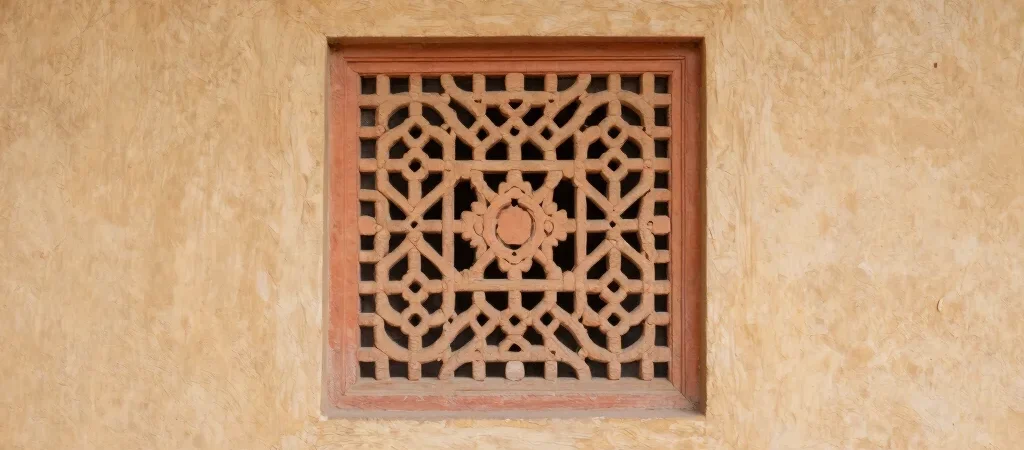
A carved screen, a repeated border, or a familiar geometric pattern can carry a lot of visual weight. In an interior, the question is not simply where to add a motif, but what role it should play in the room. Using traditional Indian design references with intention starts by looking at proportion, material, and context.
Begin With the Reference
Look closely at the source element before adapting it: its geometry, rhythm, scale, and relationship to the architecture around it. A motif found in a screen or threshold may work differently when moved onto a wall covering or furnishing. Understanding those relationships helps avoid treating a reference as a decorative stamp.
Choose Its Place Carefully
One well-placed pattern can establish a focal point; repeating it across every surface can make it harder to notice. Consider how people enter and move through the room, where natural light falls, and what existing architectural elements already draw the eye. The design can then give the reference a defined place without asking it to do everything.
Make Material Part of It
The same geometry reads differently as a carved detail, a printed textile, or a graphic on a wall. Material, finish, and scale affect how a motif meets the rest of the interior, so they belong in the design conversation from the start. Before selecting a pattern, identify the architectural element or visual quality you want it to carry into the space.